

The Sticky Cabinet Test: What Kitchen Grease Collects in 30 Days
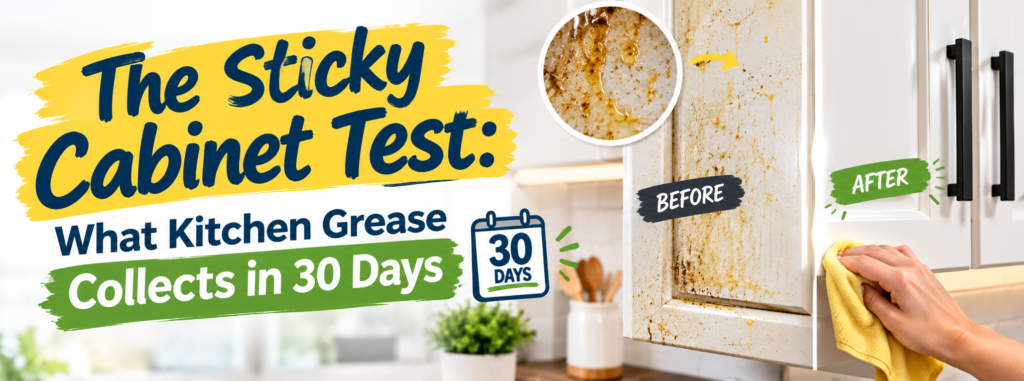
Kitchen cabinets can look perfectly clean from across the room while hiding a surprisingly sticky layer of grease, dust, food particles, and everyday residue. To find out just how much buildup can collect, imagine — or actually perform — the Sticky Cabinet Test: clean one small cabinet surface thoroughly, leave it untouched for 30 days, and then inspect what accumulates.
For homeowners who rely on house cleaning Prosper TX services, this simple experiment reveals why kitchen cabinets deserve more attention than they often receive. The cabinets closest to your stove, oven, microwave, and food-preparation areas are constantly exposed to airborne cooking oils. Over time, that invisible mist can settle onto cabinet doors and create a surface that feels tacky even when it doesn’t look obviously dirty.
So what exactly collects on kitchen cabinets during 30 days of normal cooking?
Quite a lot.
What Is the Sticky Cabinet Test?
The Sticky Cabinet Test is a simple way to visualize how much residue a kitchen can accumulate over time.
Start by thoroughly cleaning a small section of a cabinet door. Once it is clean and completely dry, leave it alone for approximately 30 days while using the kitchen normally.
At the end of the month, inspect the same area.
You may notice:
- A slightly sticky texture
- A duller appearance
- Fingerprints that stand out more clearly
- Dust attached to the surface
- Tiny food particles
- Greasy areas around handles
- A film that wasn’t visible before
- More buildup on cabinets located near cooking appliances
The experiment isn’t about creating a perfect scientific measurement. It’s about showing how ordinary cooking creates residue that can accumulate gradually.
Why Does Kitchen Grease End Up on Cabinets?
Cooking produces more than the food sitting in your pan.
When oil, butter, meat, sauces, and other ingredients are heated, tiny particles and vapors can become airborne. Some of that material eventually settles on nearby surfaces.
This can happen even when you don’t see visible smoke.
The grease doesn’t necessarily land as a thick layer. Instead, small amounts can accumulate over many cooking sessions.
A little residue today may be almost impossible to notice.
After weeks of cooking, however, that residue can become a noticeable film.
This is one reason Prosper cleaning services often pay close attention to kitchen cabinets during detailed cleaning visits.
The Grease-Dust Combination Is the Real Problem
Grease by itself can be difficult to notice.
Dust by itself may simply settle lightly on the surface.
Put the two together, and you can get something much more stubborn.
Greasy residue gives dust something to stick to. Instead of simply wiping away with a dry cloth, dust can become attached to the cabinet’s surface.
Over time, repeated cooking creates additional layers.
The result can be a sticky, dull film that requires more than a quick dusting.
This is especially noticeable on cabinets with textured finishes, grooves, decorative trim, or raised panels where residue can collect in small spaces.
Which Cabinets Get the Greasiest?
Not every cabinet in the kitchen is exposed to the same amount of buildup.
The cabinets closest to cooking areas typically experience the most exposure.
Cabinets Above the Stove
These are often among the hardest-working surfaces in the kitchen.
Steam, cooking vapors, grease, and heat rise directly toward them.
Even when a range hood is operating, some airborne residue can still settle on surrounding surfaces.
Cabinets Beside the Stove
Cabinets immediately next to the cooking area can also collect grease.
Splashes and airborne particles may reach these surfaces during everyday cooking.
Cabinets Around the Microwave
Microwaves can produce steam and food particles, especially when containers are uncovered or food splatters inside the appliance.
Nearby cabinets may gradually collect some of that residue.
Cabinet Handles
Handles deserve special attention because they’re touched repeatedly.
Hands can transfer natural oils, food residue, lotion, and other substances to cabinet hardware throughout the day.
That means the handle can become dirty even when the cabinet door itself looks relatively clean.
What Happens During the 30-Day Test?
The first few days may not reveal much.
Your cabinet might still look completely clean.
After a week or two, however, you may begin noticing subtle changes.
The surface may feel slightly different when you run your fingers across it.
By the end of 30 days, the difference can become much more obvious.
The exact amount of buildup depends on several factors, including:
- How often you cook
- What types of food you prepare
- How much oil you use
- Whether you fry food frequently
- How effective your ventilation is
- The location of the cabinet
- The cabinet’s finish
- How often the surface is already cleaned
A household that cooks several times a day will naturally produce different results from a household that rarely uses the kitchen.
Frying Creates a Different Kind of Challenge
Frying foods can introduce more oil into the surrounding environment than many other cooking methods.
When oil becomes hot, tiny droplets can become airborne.
Some settle immediately. Others can travel farther before landing.
This doesn’t mean you should avoid frying.
It simply explains why kitchens where frying happens frequently may require more attention to surrounding surfaces.
If you perform the Sticky Cabinet Test in a kitchen where fried foods are regularly prepared, the difference between day one and day 30 may be particularly noticeable.
Your Range Hood Helps — but It Isn’t a Force Field
Kitchen ventilation is important, but even a good range hood cannot necessarily capture every particle produced during cooking.
Air movement, cooking temperature, the type of hood, the location of the burners, and the way the kitchen is designed can all influence where airborne residue travels.
That means your cabinets may still need regular cleaning even if you consistently use the range hood.
Ventilation can reduce the amount of residue that settles on surfaces, but it doesn’t eliminate the need for maintenance.
Why Cabinet Grease Can Be Hard to Remove
Fresh residue is generally easier to remove than old buildup.
When grease remains on a surface for an extended period, it can mix with dust and other particles.
The resulting film may become increasingly stubborn.
That’s why a cabinet that hasn’t been cleaned in months can require significantly more effort than one that receives routine attention.
The finish of the cabinet matters too.
Different materials and coatings respond differently to cleaning products and moisture. Before using any cleaner, it is important to know what the cabinet manufacturer recommends.
Don’t Assume Every Cabinet Cleaner Is Safe
One common cleaning mistake is treating every cabinet surface like ordinary glass or tile.
Cabinets can be made from or finished with materials such as:
- Painted wood
- Natural wood
- Laminate
- Thermofoil
- Veneer
- MDF
- Other specialty finishes
A product that works well on one surface may not be appropriate for another.
When you’re unsure, check the manufacturer’s care instructions and test any cleaning solution on an inconspicuous area first.
Avoid soaking cabinet surfaces, particularly around seams and edges.
The Cabinet Handle Test
If you want to add another part to your 30-day experiment, inspect the cabinet handles.
Handles are touched constantly.
Before cooking, after handling food, while opening drawers, and during cleanup, people repeatedly touch the same small areas.
Over time, those contact points can accumulate oils and residue.
Try wiping a frequently used cabinet handle with a clean microfiber cloth.
You may be surprised by how much residue comes off even when the handle looks relatively clean.
This is one reason detailed residential cleaning Prosper routines should include high-touch kitchen surfaces rather than focusing only on floors and countertops.
Why Regular Cabinet Cleaning Matters
Cabinet cleaning isn’t only about appearance.
Keeping kitchen surfaces maintained prevents layers of residue from becoming increasingly difficult to remove.
Routine cleaning also gives you the opportunity to catch spills, food residue, and buildup before they become long-term problems.
Instead of waiting until cabinets feel sticky, consider incorporating them into your normal kitchen-cleaning schedule.
A quick maintenance wipe can take considerably less effort than a major degreasing session later.
How Often Should Kitchen Cabinets Be Cleaned?
There isn’t one universal schedule for every household.
Your cleaning frequency should depend on how your kitchen is used.
Light Cooking
If you rarely cook, cabinet surfaces may only need occasional cleaning.
Regular Home Cooking
For households preparing meals several times a week, cabinets around the stove and other cooking areas should be checked regularly.
Heavy Cooking
If you cook daily, fry foods frequently, or prepare meals that generate significant grease and steam, high-exposure cabinets may need more frequent attention.
The key is to avoid letting buildup continue unchecked.
A Simple Cabinet Cleaning Routine
Keeping kitchen cabinets clean doesn’t have to become an all-day project.
Try breaking the job into manageable steps.
1. Remove Loose Dust
Use a clean microfiber cloth to remove loose dust and crumbs.
2. Identify Greasy Areas
Pay special attention to cabinets above and beside the stove.
3. Use an Appropriate Cleaning Solution
Choose a product that is safe for your cabinet material.
4. Work in Small Sections
Rather than trying to clean the entire kitchen at once, work on a few cabinet doors at a time.
5. Wipe Away Residue
Use a clean cloth to remove the loosened buildup.
6. Dry the Surface
Don’t leave excessive moisture sitting on cabinet doors or around seams.
7. Clean the Hardware
Wipe handles, pulls, and other frequently touched areas.
This routine can help keep small amounts of residue from becoming a major cleaning project.
Don’t Forget the Top of the Cabinets
If your cabinets don’t reach the ceiling, there may be another hidden collection point in the kitchen.
The tops of cabinets can accumulate dust and grease over time.
Because they’re often above eye level, they’re easy to overlook.
The combination of airborne cooking residue and dust can create a thick layer that may not be obvious until someone finally checks.
During a deep cleaning, cabinet tops should be inspected and cleaned according to the material and accessibility of the surface.
This is one of the areas where deep cleaning Prosper TX services can make a noticeable difference.
What About Inside the Cabinets?
The Sticky Cabinet Test focuses on the exterior, but the inside of your cabinets deserves attention too.
Interior shelves can collect:
- Crumbs
- Spilled ingredients
- Powder from baking products
- Food packaging residue
- Dust
- Small food particles
You don’t necessarily need to empty every cabinet every week.
Instead, inspect them periodically and clean spills as soon as they happen.
A good opportunity for a more thorough interior cleaning is when you’re already reorganizing or decluttering your kitchen.
The Difference Between Cleaning and Degreasing
Not every cabinet needs heavy degreasing every time it is cleaned.
Routine cleaning is about removing everyday dust, fingerprints, crumbs, and light residue.
Degreasing is more intensive and is generally needed when a surface has developed a noticeable oily film.
Using unnecessarily aggressive products on a cabinet that only needs light cleaning can potentially damage certain finishes.
The better approach is to match the cleaning method to the amount and type of buildup.
What Makes a Kitchen Feel “Deep Cleaned”?
A kitchen can look clean because the most obvious surfaces are clean.
Countertops may be wiped.
Floors may be vacuumed.
The sink may be polished.
But small overlooked areas can make the space feel less fresh.
Clean cabinet fronts, handles, backsplash areas, appliance exteriors, and other frequently touched surfaces can make a significant visual difference.
This is why professional cleaning company Prosper TX services often go beyond simply cleaning the floor and countertops.
The details matter.
When Kitchen Grease Becomes a Bigger Job
If cabinet surfaces haven’t been cleaned for a long time, the buildup may be much more stubborn.
You might notice a sticky feeling even after wiping the surface.
The cloth may pick up yellowish or brownish residue.
Some areas may appear darker than others.
At this point, repeatedly wiping with a dry cloth isn’t likely to solve the problem.
The surface may require a more targeted cleaning approach that is appropriate for the cabinet material.
If you’re unsure how to safely remove heavy grease, professional professional cleaners Prosper can help address the buildup without guessing which products or techniques are appropriate.
A 30-Day Challenge You Can Try
Want to see how much your own kitchen accumulates?
Try your own version of the Sticky Cabinet Test.
Choose one cabinet near the cooking area.
Clean it thoroughly.
Take a photo.
Then leave it alone for 30 days while continuing to use your kitchen normally.
At the end of the month:
- Take another photo.
- Look closely at the surface.
- Run a clean finger lightly across an appropriate area.
- Check the cabinet handle.
- Compare it with a cabinet that receives regular cleaning.
- Notice where the most buildup occurred.
The experiment can make invisible kitchen maintenance much more obvious.
You may even discover that some cabinets need attention more frequently than others.
How to Keep the Buildup Under Control
The easiest way to manage kitchen grease is to prevent a thick layer from developing.
A few habits can help:
- Turn on your range hood when cooking.
- Wipe spills promptly.
- Clean cabinet handles regularly.
- Don’t allow grease splatters to sit for weeks.
- Use cleaning products appropriate for the cabinet finish.
- Include cabinet fronts in your normal kitchen routine.
- Periodically inspect areas above and beside cooking appliances.
- Don’t forget cabinet tops if they’re accessible.
These small steps can prevent the Sticky Cabinet Test from turning into a much bigger cleaning project.
When You Need More Than a Quick Wipe
Busy households don’t always have time to keep up with every surface.
Between cooking, work, family responsibilities, and other household chores, cabinet cleaning can easily move down the priority list.
That’s where recurring cleaning services Prosper can help.
Regular professional cleaning can keep everyday buildup from becoming overwhelming while giving homeowners more time to focus on other priorities.
For larger cleaning projects, affordable deep cleaning services in Prosper may also be useful when kitchen surfaces have accumulated significant residue.
The Takeaway From the Sticky Cabinet Test
The biggest lesson from the 30-day Sticky Cabinet Test is that kitchen grime doesn’t always announce itself.
Grease can accumulate gradually.
Dust can attach to it.
Food particles can settle into the film.
Fingerprints can add another layer.
And because the process happens little by little, you may not notice how much buildup has accumulated until you finally clean the surface.
Your cabinets don’t necessarily need to be spotless every hour of every day. But regular maintenance can keep small amounts of residue from becoming a stubborn cleaning challenge.
If your kitchen cabinets are already sticky, dull, or visibly coated with buildup, it may be time for more than a quick wipe. Whether you handle the task yourself or bring in trusted home cleaners in Prosper Texas, consistent cleaning can help keep one of the busiest areas of your home looking fresher.
After all, the kitchen may look clean from across the room — but the Sticky Cabinet Test can reveal what your eyes don’t always see.
Contact us at 214–597–6654 or visit https://cowboyscleaning.com/house-cleaning-services-prosper/ to book your service.