

House Cleaning Frisco TX: The Cabinet Underside Trap — Grease and Dust Collecting Beneath Kitchen Cabinets
When homeowners think about maintaining a clean kitchen, they usually focus on countertops, stovetops, sinks, and floors. However, one frequently overlooked area is the underside of kitchen cabinets, where airborne cooking grease and dust can combine to form a stubborn, sticky layer. For homeowners looking for House Cleaning Frisco TX, understanding this hidden cleaning challenge can make a significant difference in keeping the kitchen fresh, hygienic, and well-maintained.
Every time you fry food, sauté vegetables, roast meat, or prepare meals over a hot stove, tiny grease particles can become airborne. These particles travel through the kitchen before settling on nearby surfaces, including the undersides of cabinets. When dust, lint, and other airborne debris land on this oily film, they begin to create a layer of grime that becomes increasingly difficult to remove over time.
Because this buildup is often outside the normal line of sight, many homeowners do not notice it until the surface feels sticky or develops a visible discoloration. Regularly cleaning this area helps prevent stubborn residue, protects cabinet finishes, and contributes to a more comfortable cooking environment.
Whether you maintain your home independently or rely on professional Frisco cleaning services, knowing what causes this buildup and how to address it can help you establish a more complete kitchen cleaning routine.
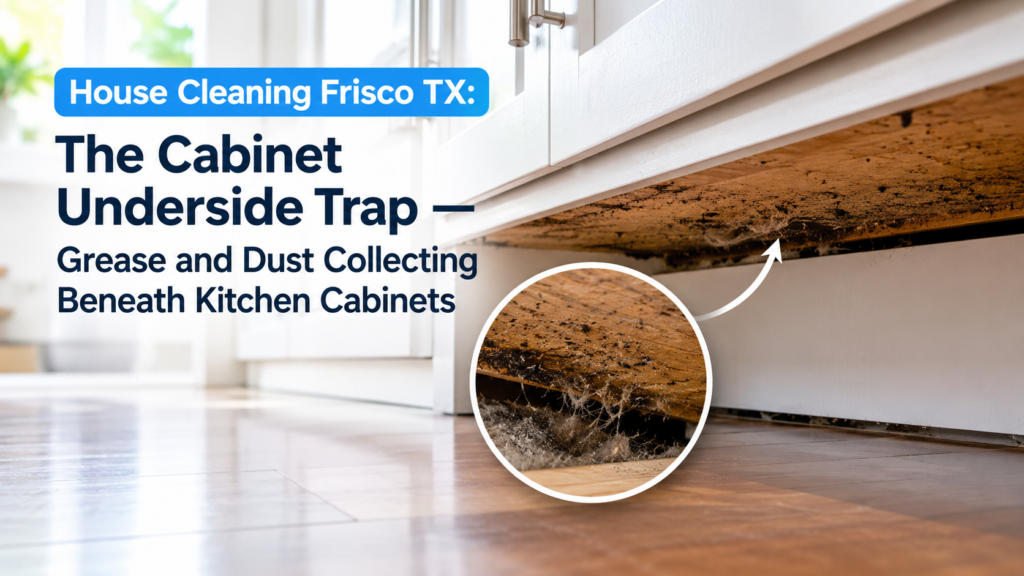
What Is the Cabinet Underside Trap?
The cabinet underside trap refers to the hidden surface beneath upper kitchen cabinets where cooking grease, dust, and airborne particles gradually accumulate. Unlike countertops, which are cleaned frequently, this area may go weeks or months without receiving attention.
The problem is especially noticeable in kitchens where frying, grilling, and high-heat cooking happen regularly. Grease particles can travel beyond the immediate cooking area, settling on cabinet bottoms, trim, decorative edges, and other nearby surfaces.
Over time, the combination of grease and dust creates a residue that may appear yellowish, gray, or brown. The surface can feel tacky even when it does not look particularly dirty.
A regular maid service Frisco TX homeowners use should pay attention to these overlooked areas as part of a detailed cleaning routine, especially when grease has accumulated near the stove.
Why This Surface Is Easy to Miss
Several factors make cabinet undersides particularly easy to overlook:
- Limited visibility: Most people rarely look directly beneath upper cabinets during everyday cleaning.
- Infrequent contact: Unlike handles and countertops, cabinet undersides are not touched or wiped down as often.
- Gradual accumulation: Grease and dust build up slowly, making the change difficult to notice from one day to the next.
- Hard-to-reach corners: Cabinet edges, seams, and decorative trim can collect residue that ordinary wiping misses.
- Misleading appearance: A surface may look relatively clean while still carrying a thin, sticky layer.
These factors allow grime to develop quietly until routine wiping is no longer enough.
How Cooking Grease and Dust Create Sticky Buildup
Understanding how this residue forms makes it easier to prevent it.
Step 1: Cooking Releases Airborne Grease
Cooking oils and fats can become airborne in tiny droplets during frying, sautéing, and other high-heat cooking methods. Steam and rising warm air can carry these particles upward and outward from the stove.
Range hoods and ventilation systems help capture cooking emissions, but their effectiveness depends on proper installation, maintenance, airflow, and consistent use. Some particles can still reach nearby cabinet surfaces.
Step 2: Grease Settles on Cabinet Surfaces
As airborne particles cool, they can settle on the undersides of cabinets. The residue may be nearly invisible at first, forming a thin film that ordinary household lighting does not easily reveal.
Cabinet surfaces close to the stove may experience heavier accumulation, although grease can also travel to surrounding areas.
Step 3: Dust Attaches to the Oily Film
Once grease settles, it creates a surface that readily traps airborne dust, lint, and other small particles. Instead of brushing away easily, this debris adheres to the oily residue.
Each additional cooking session can contribute another layer of particles. The result is a mixture of dust and grease that becomes increasingly noticeable when touched or wiped.
Step 4: The Residue Becomes More Difficult to Remove
Fresh grease may respond to a gentle wipe with an appropriate cleaner. Older buildup, however, can become thicker and more resistant to ordinary cleaning methods.
Repeated exposure to cooking oils, dust, and household particles can create a stubborn film around cabinet edges and corners. Attempting to remove it with excessive scrubbing or harsh chemicals may damage the finish.
This is why regular maintenance is generally easier than waiting until the entire underside feels sticky.
Signs Your Kitchen Cabinets Need Attention
You do not need to wait for visible stains to begin cleaning beneath your cabinets. Several warning signs indicate that residue may be accumulating.
1. A Sticky or Tacky Surface
One of the clearest signs is a slightly sticky feeling when you run a clean finger or cloth across the cabinet underside. This usually indicates that grease has collected on the surface.
2. Yellow or Gray Discoloration
Light-colored cabinets may develop a yellowish tint from accumulated grease, while dust can contribute to a gray or dull appearance. Discoloration can also result from aging, sunlight, or changes in the cabinet finish, so the cause should be assessed before choosing a cleaning method.
3. Darkened Edges and Corners
The edges of cabinet doors, decorative molding, and seams can trap residue. If these areas look darker than surrounding surfaces, they may need more detailed attention.
4. Dust That Does Not Wipe Away Easily
Ordinary dry dusting may remove loose particles but leave behind a sticky layer. If the cloth drags across the surface or leaves streaks, grease may be holding the remaining debris in place.
5. A Dull or Neglected Appearance
Even when the buildup is not immediately visible, greasy cabinet undersides can make an otherwise clean kitchen feel unfinished.
Professional house cleaning Frisco Texas services can help address these less obvious details, particularly when homeowners want a more comprehensive kitchen cleaning.
How to Clean Beneath Kitchen Cabinets Safely
The right cleaning method depends on the cabinet material, finish, and severity of the buildup. A gentle approach is usually the safest starting point.
Step 1: Identify the Cabinet Finish
Before applying a cleaner, determine whether your cabinets are painted, laminate, wood, or another material. Different finishes respond differently to moisture and cleaning products.
Review the manufacturer’s care instructions whenever possible. If you are unsure how a product will affect the surface, test it in a small, inconspicuous area first.
Step 2: Remove Loose Dust
Use a dry microfiber cloth or a suitable soft brush to remove loose dust and debris before applying moisture. This helps prevent loose particles from spreading across the greasy surface.
For hard-to-reach areas, use an appropriate extension tool that allows you to clean without straining or losing your balance.
Step 3: Apply a Suitable Degreasing Cleaner
Choose a cleaner approved for your cabinet material. For many washable finishes, a small amount of mild dish soap diluted in warm water may help loosen ordinary grease.
Apply the solution to a cloth rather than saturating the cabinet underside. Excess moisture can damage wood, seams, veneer, and some painted finishes.
Avoid abrasive pads, aggressive scrubbing, and unapproved solvents. Never mix cleaning chemicals, particularly bleach with ammonia or acidic products.
Step 4: Wipe in Small Sections
Work across the cabinet underside in manageable sections, paying attention to corners, trim, and the areas closest to cooking appliances.
Use gentle pressure and change to a clean section of the cloth as grease transfers onto it. If the residue remains stubborn, repeat the process with an appropriate cleaner rather than scrubbing aggressively.
Step 5: Remove Remaining Cleaner
Follow the product instructions for rinsing or wiping away residue. A separate cloth lightly dampened with clean water may be suitable for many washable surfaces.
Avoid allowing water to pool along cabinet seams or exposed edges.
Step 6: Dry the Surface Completely
Use a clean, dry microfiber cloth to remove remaining moisture. Proper drying helps protect cabinet materials and prevents water marks.
If the surface still feels greasy, inspect it again after drying and repeat the cleaning process if the finish permits.
Common Mistakes That Make Grease Buildup Worse
Cleaning beneath cabinets can seem straightforward, but a few common mistakes may create additional work or damage the surface.
Using Too Much Water
Excessive moisture can seep into joints, unfinished edges, and wood-based materials. Use a lightly dampened cloth and dry the surface promptly.
Scrubbing With Abrasive Materials
Steel wool, rough scouring pads, and overly abrasive sponges can scratch paint, dull protective coatings, or damage laminate. Soft cloths are generally a better starting point.
Applying the Wrong Cleaning Product
A powerful degreaser may work well on some surfaces but strip or discolor others. Always verify compatibility with the cabinet finish before using a product.
Cleaning Only When the Buildup Is Visible
Waiting for a thick layer of grime to form makes the task more difficult. Light, consistent maintenance can prevent residue from becoming a larger cleaning project.
Forgetting the Surrounding Areas
Grease can also settle on cabinet faces, range hood surfaces, backsplash edges, and nearby appliance exteriors. Cleaning only the underside may leave other surfaces looking uneven.
A thorough kitchen routine considers these connected areas rather than treating each surface in isolation.
How Often Should You Clean Cabinet Undersides?
There is no single schedule that works for every household. The ideal frequency depends on cooking habits, ventilation, cabinet placement, and the amount of airborne grease produced.
Consider the following general schedule as a starting point:
- Weekly: Check the cabinet undersides nearest the stove and remove fresh residue if needed.
- Every two to four weeks: Wipe accessible cabinet undersides and nearby trim, adjusting the schedule to match cooking activity.
- During monthly kitchen detailing: Inspect corners, cabinet edges, and areas above frequently used cooking appliances.
- During seasonal deep cleaning: Examine less accessible surfaces and address stubborn buildup with products appropriate for the finish.
Households that cook frequently, especially with oil, may need more frequent attention. Kitchens with effective ventilation and lighter cooking activity may require less.
The goal is not to clean every surface constantly. It is to establish a practical routine that prevents neglected areas from becoming difficult to maintain.
How Proper Ventilation Helps Reduce Grease Accumulation
Cleaning removes existing residue, but reducing the amount of airborne grease can help slow future buildup.
Use Your Range Hood Consistently
Turn on the range hood when cooking and follow the manufacturer’s guidance for its operation. A properly functioning hood that vents outdoors can help remove cooking emissions from the kitchen.
Recirculating models can also reduce some airborne particles when equipped with appropriate, well-maintained filters, although their performance differs from that of externally vented systems.
Maintain Filters and Ventilation Equipment
Grease filters can become clogged as they collect cooking residue. Clean or replace them according to the manufacturer’s recommendations.
A poorly maintained range hood may be less effective at capturing emissions, allowing more particles to circulate through the kitchen.
Adjust Cooking Habits When Practical
Using lids when appropriate, avoiding unnecessary overheating of cooking oils, and choosing suitable cooking methods can help reduce the amount of grease released into the surrounding air.
These steps will not eliminate all residue, but they can make routine kitchen maintenance easier.
Why Detailed Kitchen Cleaning Matters for Frisco Homeowners
A clean kitchen involves more than shining countertops and spotless floors. Hidden surfaces can influence the overall appearance and condition of the room, particularly when grease and dust have been accumulating for months.
For households seeking residential cleaning Frisco, including cabinet undersides in the cleaning routine helps address the details that ordinary maintenance may miss.
Professional cleaners can also help homeowners manage broader household tasks, such as dusting, bathroom cleaning, floor care, and detailed kitchen maintenance. Depending on the provider and service agreement, homeowners may choose standard visits or more intensive cleaning appointments.
When to Consider Professional Help
Some situations may call for additional assistance:
- Grease has accumulated into a thick, sticky layer.
- Cabinet undersides have detailed molding or difficult-to-reach corners.
- The cabinet material requires special care.
- The kitchen has not received a detailed cleaning in a long time.
- You want to combine cabinet detailing with other deep-cleaning tasks.
A reputable cleaning company Frisco TX homeowners choose should understand that different surfaces require different cleaning methods. Ask about the areas included in the service, the products used, and any special care required for your cabinetry.
For homeowners comparing professional cleaners Frisco, it is worth confirming whether detailed cabinet undersides are included in the selected package rather than assuming every cleaning appointment covers them.
Choosing the Right Cleaning Service for Your Kitchen
Different homes have different cleaning needs. Some homeowners want occasional help with detailed tasks, while others prefer ongoing maintenance.
If you are comparing deep cleaning Frisco TX options, look for services that can address accumulated grease, neglected surfaces, and other areas requiring extra attention. A deep clean may be appropriate when routine wiping no longer removes the residue effectively.
Homeowners preparing for a move can also ask about move out cleaning Frisco and move in cleaning Frisco TX services. Depending on the package, these appointments may help prepare kitchens for new occupants or leave a former home in better condition.
Residents in apartments may benefit from apartment cleaning Frisco, particularly when they want help maintaining a smaller kitchen with limited ventilation or heavily used cooking areas.
Businesses have different requirements. Office cleaning Frisco TX may include kitchenettes and shared food preparation areas, while commercial cleaning Frisco can address cleaning needs in appropriate business settings. The scope of service should reflect the facility, its surfaces, and its cleaning requirements.
For properties undergoing renovation, post construction cleaning Frisco may be useful for removing construction-related dust and residue after work is complete. However, construction dust and cooking grease are different problems and may require different cleaning methods.
Similarly, carpet cleaning Frisco TX addresses a separate part of household maintenance, but it can be included in a broader plan when carpets need attention alongside the kitchen.
The most suitable service depends on the condition of the home, the tasks required, and the frequency of visits.
Building a Sustainable Kitchen Cleaning Routine
Maintaining a clean kitchen becomes easier when small tasks are completed before they develop into larger problems.
Start by checking the cabinet undersides closest to the stove during your regular kitchen cleanup. If the surface feels sticky, wipe it using a cleaner suitable for the material. Add the remaining cabinet undersides to a recurring schedule so that less frequently used areas are not forgotten.
It may also help to keep a short checklist covering:
- Cabinet undersides and edges
- Cabinet door fronts and handles
- Range hood and accessible filters
- Backsplash and nearby walls
- Countertops and appliance exteriors
- Floor edges beneath cabinets
A consistent routine can reduce the time spent tackling stubborn residue during a major cleaning session.
Homeowners who prefer outside assistance can explore recurring cleaning Frisco options. Depending on the household’s needs, weekly cleaning Frisco TX may help maintain frequently used spaces, while less frequent appointments may work for homes that require lighter upkeep.
When comparing providers, look beyond the advertised price and consider the scope of work, scheduling, communication, and experience with your particular cleaning needs.
If you are searching for the best cleaners in Frisco TX, request a clear description of what is included. Homeowners looking for an affordable maid service Frisco should also confirm whether detailed tasks carry additional charges.
Likewise, when researching a top cleaning company Frisco Texas, ask how the team handles delicate surfaces and stubborn kitchen grease. An affordable deep cleaning services in Frisco option may be helpful when the buildup extends beyond ordinary maintenance.
If time is limited, you may also look for same day cleaning Frisco TX, although availability and the type of work offered will depend on the provider’s schedule.
Households concerned about product ingredients can ask about eco friendly cleaning Frisco options and verify that the selected products are suitable for their cabinets. Choosing a gentler product does not mean ignoring manufacturer instructions or using a product that is incompatible with the finish.
Ultimately, reliable house cleaning services in Frisco TX should offer clear expectations and a practical approach to maintaining the home. Homeowners searching for a professional maid service near Frisco Texas or trusted home cleaners in Frisco Texas can compare service details, reviews, and cleaning checklists before making a decision.
If you need a move-related appointment, a move out cleaning service in Frisco TX may also be worth considering, especially when kitchen cabinets and other detailed surfaces need attention before a property handover.
Conclusion: Don’t Let the Cabinet Underside Trap Take Over Your Kitchen
The undersides of kitchen cabinets may be easy to overlook, but they can collect a surprising combination of airborne grease and dust. Over time, this residue can become sticky, dull the appearance of the kitchen, and require more effort to remove.
The most effective approach is to clean these surfaces regularly, use products appropriate for the cabinet finish, minimize excess moisture, and maintain proper kitchen ventilation. Paying attention to cabinet edges, trim, and nearby surfaces also helps create a more complete cleaning routine.
For homeowners looking for House Cleaning Frisco TX, addressing the cabinet underside trap is a practical way to improve kitchen maintenance beyond the obvious surfaces. Whether you handle the task yourself or arrange professional assistance, a consistent approach can help prevent stubborn buildup and keep your kitchen looking cared for.
A truly clean kitchen is not just about what you see at eye level. It is also about the hidden surfaces that deserve attention before dust and grease have a chance to settle in.
Contact us at 214–597–6654 or visit https://cowboyscleaning.com/home-cleaning-frisco-tx/ to book your service.