

House Cleaning Dallas TX: The Crayon and Marker Crisis — Removing Children’s Artwork Without Damaging Walls
Children love expressing their creativity, and sometimes their favorite canvas becomes an unexpected part of the house: the walls. From colorful crayon drawings to permanent marker masterpieces, children’s artwork can quickly turn a clean-looking room into a challenging cleaning project. While these marks may seem easy to remove, using the wrong cleaning product or technique can damage paint, leave faded patches, or create noticeable streaks.
For homeowners looking for reliable House Cleaning Dallas TX services, understanding how to handle these everyday messes is an important part of maintaining a beautiful home. Removing crayon and marker stains requires more than simply scrubbing the affected area. Different writing materials react differently to cleaning products, and even common household solutions can affect certain paint finishes.
The key is to identify the type of stain, test cleaning methods on an inconspicuous area, and use gentle techniques that protect the wall’s original appearance. Whether you are dealing with a few crayon lines in a playroom or marker drawings covering a hallway, knowing what to do can help prevent a small cleaning problem from becoming an expensive repainting project.
At Cowboys Cleaning, we understand that maintaining a clean home means paying attention to the little details, including the unexpected messes that come with everyday family life. Here is how to approach crayon and marker removal safely while protecting your walls.
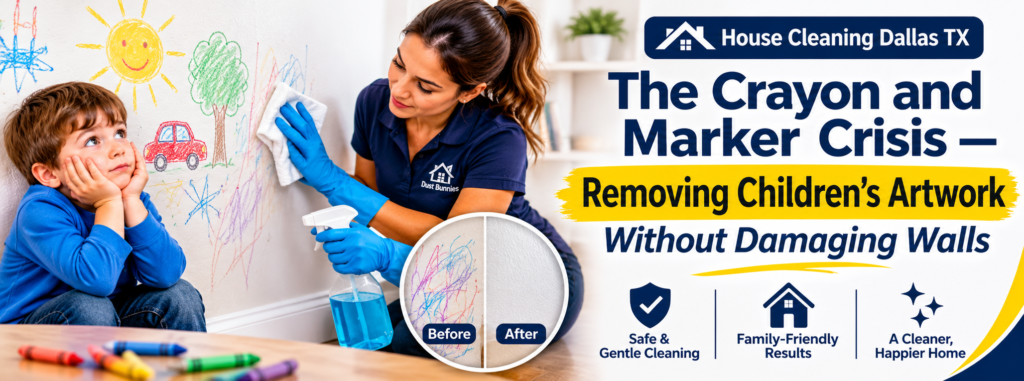
Why Crayon and Marker Stains Are Difficult to Remove
Not all wall stains are created equally. Crayons and markers contain different ingredients, which means they require different cleaning approaches.
Crayons are generally made from wax, pigments, and other ingredients that allow them to glide smoothly across surfaces. When children draw on painted walls, the wax can leave a thick, colored residue that sits on top of the paint or becomes lodged in textured surfaces.
Markers create a different challenge. Washable markers are usually easier to remove because their pigments are designed to release from surfaces. Permanent markers, however, contain stronger colorants and solvents that can penetrate porous materials and leave stubborn discoloration.
Understanding the difference is important before reaching for a cleaning product.
How Crayon Marks Affect Painted Walls
Crayon marks often appear as thick lines, overlapping circles, or large colored patches. Because crayons contain wax, wiping them with water alone may not remove the residue.
In some situations, rubbing too aggressively can spread the wax and pigment across a larger section of the wall. Heat can also soften the wax, potentially making it easier to smear.
The cleaning method should focus on carefully lifting the residue rather than grinding it into the paint.
Why Marker Stains Require Extra Caution
Marker stains can be more unpredictable, especially when permanent ink is involved. Some cleaning products may dissolve the ink but also affect the wall’s paint or finish.
A solution that successfully removes marker from one wall may leave a dull or discolored spot on another. This is particularly important when dealing with flat or matte paint, which can be more sensitive to friction and moisture.
Before attempting to remove any marker stain, identify the paint finish and test the proposed cleaning method in a hidden location.
House Cleaning Dallas TX: Identify Your Wall’s Paint Finish Before Cleaning
One of the most important steps in removing crayon and marker marks is understanding the type of paint covering your walls.
Paint finishes respond differently to cleaning. A product that works well on a durable semi-gloss wall may damage a delicate flat-finish surface.
If you are unsure which paint finish you have, check previous renovation records, leftover paint containers, or ask your painter.
Flat and Matte Paint
Flat and matte finishes have little to no shine. They are popular in bedrooms and living spaces because they create a smooth, understated appearance.
However, these finishes can be difficult to clean. Excessive rubbing may remove pigment, create shiny patches, or leave permanent-looking marks.
For these walls:
- Start with a dry microfiber cloth to remove loose surface debris.
- Avoid abrasive sponges and rough scrubbing pads.
- Use minimal moisture when testing a cleaning solution.
- Stop immediately if the paint begins transferring onto the cloth.
- Consider repainting if the stain has penetrated the finish.
Eggshell and Satin Paint
Eggshell and satin finishes have a slight sheen and generally offer better resistance to everyday cleaning than flat paint.
They are commonly used in family rooms, hallways, and bedrooms where fingerprints and occasional wall marks are more likely.
A soft microfiber cloth and a small amount of mild soap diluted in water may be suitable for some surfaces. However, testing remains essential because paint quality and age can influence cleaning results.
Semi-Gloss and Gloss Paint
Semi-gloss and gloss finishes are typically more durable and easier to wipe down.
They are often found in kitchens, bathrooms, laundry rooms, and areas that experience frequent contact.
Although these finishes generally tolerate gentle cleaning better, they are not completely stain-proof. Strong solvents, abrasive products, and excessive scrubbing can still dull the surface or damage the paint.
Always Test Cleaning Methods on an Inconspicuous Area
The biggest mistake homeowners make when cleaning crayon and marker stains is applying a product directly to the visible artwork.
Even products marketed as gentle or all-purpose cleaners can react differently with various paint formulations.
A simple test can help prevent unnecessary damage.
Where to Perform a Test
Choose a discreet area that has the same paint finish as the stained wall.
Good locations include:
- Behind a bedroom door.
- Inside a closet with matching wall paint.
- Behind a large piece of furniture.
- Along a less noticeable section of the wall.
Avoid testing on a different surface or paint finish. The results may not accurately represent how the cleaner will affect the stained area.
How to Perform a Safe Cleaning Test
Follow these steps before cleaning the visible marks:
- Apply a small amount of the cleaning solution to a clean microfiber cloth rather than directly onto the wall.
- Gently wipe a small, hidden section without applying excessive pressure.
- Allow the area to dry completely.
- Check for changes in color, texture, shine, or paint transfer.
- If the finish remains unchanged, proceed cautiously with the stained area.
Do not assume a product is safe simply because no immediate damage appears. Some changes become more noticeable after the surface dries.
If the test area becomes lighter, shinier, sticky, or discolored, stop using that product.
How to Remove Crayon Marks Without Damaging Paint
Crayon removal usually starts with addressing the wax before attempting to remove the remaining pigment.
The goal is to loosen and lift the residue while minimizing contact with the surrounding paint.
Step 1: Remove Excess Crayon Residue
If the crayon marks are thick, begin by carefully lifting any raised wax.
Use a soft plastic edge, such as a plastic card, to gently remove excess material. Keep the tool nearly flat against the wall to avoid scratching the surface.
Never use a knife, metal scraper, or other sharp object.
Step 2: Try a Mild Soap Solution
Mix a small amount of mild dish soap with warm water.
Dampen a microfiber cloth and wring it out thoroughly. The cloth should be slightly damp rather than wet.
Gently dab or wipe the crayon mark using small movements. Avoid aggressive back-and-forth scrubbing because this can spread the wax or wear down the paint.
Step 3: Rinse and Dry Carefully
Once the residue begins lifting, use a separate cloth lightly dampened with clean water to remove any remaining soap.
Pat the area dry with a clean microfiber towel.
Allow the wall to dry completely before deciding whether another cleaning attempt is necessary.
Step 4: Know When to Stop
If the crayon pigment remains after a gentle cleaning attempt, avoid repeatedly scrubbing the same location.
Additional friction can damage the paint and create a visible patch that looks worse than the original drawing.
Sometimes, touching up the paint is a better solution than continuing to clean.
Removing Marker Stains: What Works and What to Avoid
Marker stains require a more careful approach because their pigments and solvents can interact with paint.
The first step is determining whether the marker is washable, water-based, or permanent.
Cleaning Washable Marker
Washable markers are usually the easiest to address.
Start with a microfiber cloth lightly dampened with mild soap and water. Gently dab the affected area, working from the outside of the stain toward the center.
This helps prevent the pigment from spreading.
Use a clean section of the cloth as the ink transfers. Avoid repeatedly wiping with the same stained portion because it can redistribute the color.
Handling Permanent Marker
Permanent marker presents a greater challenge.
Some homeowners reach for rubbing alcohol or other solvent-based products because these can dissolve certain permanent inks. However, solvents may also soften, discolor, or remove paint.
Never assume that a product is safe for painted walls just because it removes ink from glass, plastic, or metal.
If considering a solvent-based cleaner:
- Read the manufacturer’s instructions carefully.
- Confirm that the product is appropriate for the wall surface.
- Test it in an inconspicuous area first.
- Use only a small amount on a cloth.
- Stop if the paint becomes sticky, transfers, or changes appearance.
Never mix different cleaning chemicals. In particular, do not combine bleach with ammonia, acids, or other household cleaners.
For large permanent-marker drawings, professional advice or a paint touch-up may be safer than experimenting with increasingly aggressive products.
Common Cleaning Mistakes That Can Damage Walls
Removing children’s artwork can become more complicated when homeowners use products or techniques that are too harsh.
Even when the intention is to clean a small area, the wrong approach can leave a noticeable difference in the wall’s appearance.
Using Abrasive Cleaning Sponges
Melamine foam cleaning sponges are sometimes used to remove stubborn marks. However, these products work through mild abrasion.
They can remove more than the stain, especially on flat and matte paint.
Repeated use may create shiny spots, uneven texture, or faded areas.
If you decide to use one, follow the manufacturer’s instructions and test a very small hidden area first. Avoid applying heavy pressure.
Scrubbing Too Hard
Pressure does not always mean better cleaning.
Aggressive scrubbing can push pigments deeper into textured walls and wear away the paint’s protective surface.
Instead, use gentle dabbing motions and allow the cleaning solution to work without excessive friction.
Applying Too Much Water
Excess moisture can seep into drywall, loosen paint, or leave watermarks.
This is especially concerning around damaged paint, existing cracks, or older wall surfaces.
Always use a well-wrung cloth and avoid soaking the area.
Using Multiple Products Without Rinsing
Layering different cleaning products can create additional residue and potentially cause unwanted chemical reactions.
Use one appropriate cleaning method at a time. If switching products, make sure the previous solution has been completely removed and the area has dried.
Protecting Your Walls From Future Crayon and Marker Accidents
While knowing how to remove stains is useful, preventing them is even better.
Children should have opportunities to express their creativity, but a few simple household adjustments can reduce the chances of artwork appearing on painted surfaces.
Consider these practical strategies:
- Create a designated art area: Set up a small table or craft station where children can draw and color comfortably.
- Use washable art supplies: Choose washable crayons, markers, and colored pencils whenever possible.
- Install a drawing surface: A chalkboard, whiteboard, or removable drawing panel can provide an alternative to walls.
- Store supplies properly: Keep markers and crayons in designated containers when they are not being used.
- Teach simple cleanup habits: Encourage children to return art supplies after finishing an activity.
- Protect frequently used areas: Consider washable paint or protective wall coverings in playrooms and children’s bedrooms.
These changes do not eliminate every accident, but they can make maintaining a clean home much easier.
When Should You Consider Professional Cleaning or Repainting?
Not every wall stain can be removed successfully with household cleaning products.
Sometimes, the pigment has penetrated the paint, the wall has a delicate finish, or previous cleaning attempts have already caused damage.
Recognizing when to stop is just as important as knowing how to clean.
Professional assistance may be appropriate when:
- Large sections of the wall are covered in crayon or marker.
- Permanent marker has left deep discoloration.
- The paint finish begins fading during cleaning.
- Multiple cleaning attempts have created uneven patches.
- The wall has textured paint that traps pigments.
- The original paint is old, damaged, or difficult to match.
A professional cleaner can help assess the surface and determine whether gentle cleaning is appropriate. If the pigment has permanently altered the finish, a painter may recommend a stain-blocking primer and matching paint.
The objective should always be to restore the wall without creating additional damage.
House Cleaning Dallas TX: Keep Your Family Home Looking Its Best
Children bring creativity, personality, and plenty of unexpected messes into a home. Although crayon and marker drawings can be frustrating, removing them does not have to mean damaging the walls.
The most effective approach begins with identifying the stain, understanding the paint finish, testing cleaning products in an inconspicuous area, and using gentle techniques. Knowing when to stop is equally important because protecting the original paint is just as valuable as removing the artwork.
Beyond wall maintenance, keeping up with everyday household cleaning helps prevent dirt, dust, and other buildup from becoming larger problems.
For homeowners seeking dependable House Cleaning Dallas TX services, Cowboys Cleaning is ready to help make home maintenance easier. From routine household upkeep to more detailed cleaning needs, having a professional team can make a meaningful difference in maintaining a comfortable living environment.
Whether you need Dallas cleaning services, residential cleaning Dallas, or assistance finding a reliable house cleaning services in Dallas TX, choosing an experienced cleaning company helps you spend less time worrying about household messes and more time enjoying your home.
Contact Cowboys Cleaning at 214–597–6654 or visit cowboyscleaning.com to learn more about available cleaning services.
Cowboys Cleaning — Keeping Dallas Homes Clean, Comfortable, and Ready for Everyday Life!