

House Cleaning Irving TX: The Upholstered Headboard Trap and the Dust Hiding Where You Rest
Bedrooms are meant to be comfortable, relaxing spaces, but some of the dust that affects their appearance collects in places homeowners rarely think to clean. One overlooked area is the upholstered headboard. If you are looking for House Cleaning Irving TX, understanding how dust, lint, pet hair, and everyday particles accumulate on fabric-covered bedroom furniture can help you maintain a cleaner and more inviting sleeping environment. Although an upholstered headboard may look clean from across the room, its texture, seams, buttons, and decorative details can hold onto debris long after the nightstands and floors have been cleaned.
For homeowners balancing busy schedules, knowing how to care for these surfaces is an important part of a practical bedroom cleaning routine. The good news is that you do not necessarily need expensive equipment or harsh chemicals to maintain an upholstered headboard. With the right vacuum attachments, fabric-safe methods, and consistent attention, you can remove surface dust without soaking the upholstery or damaging its appearance.
Whether you handle your own household chores or rely on Irving cleaning services, learning about this hidden dust trap can help you recognize the details that make a bedroom feel genuinely clean.
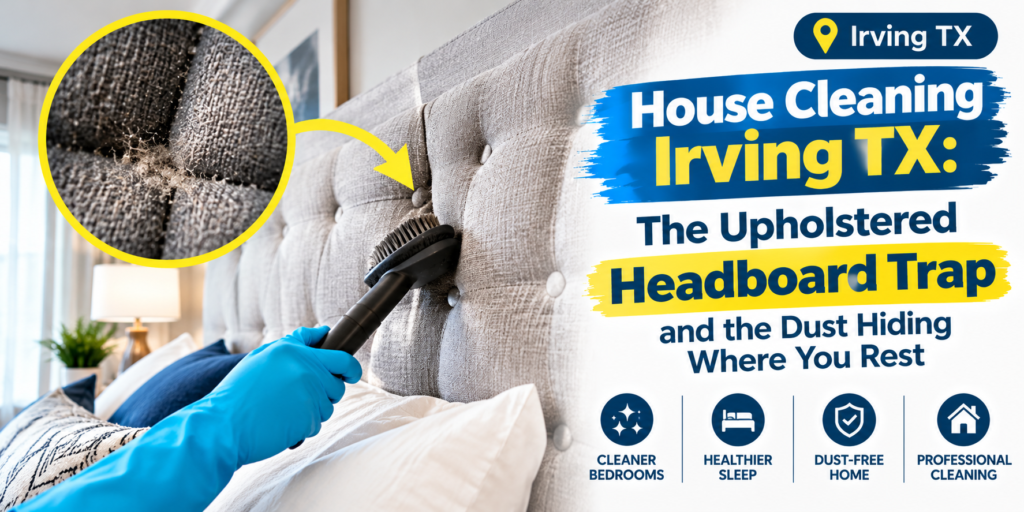
What Is the Upholstered Headboard Trap?
An upholstered headboard adds softness, texture, and style to a bedroom. Unlike a smooth wooden or metal headboard, however, fabric upholstery has small spaces where dust and other particles can settle.
Over time, these particles may become more noticeable, especially on dark fabrics, velvet-like materials, textured linen, and light-colored upholstery. Even when a room is regularly vacuumed, the headboard can remain untouched because it is not usually included in a standard floor-cleaning routine.
The problem is not always visible dirt. Fine dust can settle into fabric fibers, while loose hair and lint collect along seams and edges. Decorative buttons, tufted sections, piping, and stitching can create additional places where debris becomes trapped.
A bedroom may look tidy because the bedding is fresh and the floor is clean, yet the upholstered furniture can still need attention.
Why Headboards Are Easy to Forget
Most people naturally focus on surfaces that show dirt immediately. They wipe nightstands, change pillowcases, vacuum carpets, and straighten blankets. Headboards often fall outside these everyday habits because they are vertical surfaces that do not appear to collect as much dirt as floors or tabletops.
Several factors contribute to this oversight:
- Limited visibility: Dust along the upper edge or behind decorative details may be difficult to see.
- Fabric texture: Fibers can hold onto particles that are not easily removed with a quick wipe.
- Furniture placement: A headboard positioned close to a wall can be difficult to access from behind.
- Decorative construction: Tufting, buttons, stitching, and seams create small areas that require careful cleaning.
- Cleaning assumptions: Homeowners may assume that changing bedding and vacuuming the floor are enough to keep the entire bedroom clean.
Including the headboard in your regular bedroom routine helps address these overlooked areas before dust becomes more noticeable.
How Dust Collects on Upholstered Headboards
Dust is a mixture of tiny particles that can include fabric fibers, skin flakes, outdoor particles, soil, and other everyday debris. Its composition varies depending on the household, the surrounding environment, ventilation, pets, and daily activities.
Because upholstered headboards have textured surfaces, some particles can settle between fibers rather than remaining on top. Movement around the bed, handling blankets, and making the bed can also disturb particles already resting on nearby surfaces.
Fabric Fibers Can Hold Onto Particles
Different upholstery materials behave differently. A tightly woven fabric may allow easier surface cleaning, while a thick, textured material may hold lint and dust in its irregular surface.
Velvet and similar fabrics can also have a directional pile that changes appearance when brushed. Aggressive rubbing may flatten the fibers or create uneven-looking areas.
This is why identifying the fabric before cleaning matters. A technique that works well on durable polyester upholstery may not be appropriate for delicate linen blends, specialty finishes, or materials that require professional care.
Seams and Tufting Need Extra Attention
The broad front panel is only part of the cleaning process. Dust and loose hair can collect around stitched borders, button indentations, piping, and the narrow gap between the headboard and the mattress.
These areas are easy to overlook when cleaning quickly.
A narrow vacuum attachment can help reach some of these spaces, but it should be used gently. Pulling too hard on decorative buttons or forcing a nozzle into tight seams may damage the fabric or loosen delicate details.
Pet Hair and Lint Can Make the Problem More Noticeable
Households with pets may notice additional hair collecting on bedroom furniture. Cats and dogs that spend time on the bed can transfer loose fur to the headboard, bedding, and nearby upholstered surfaces.
Clothing fibers, blankets, and decorative pillows may contribute lint as well. These materials can become tangled in textured upholstery, making the surface look dull or less polished.
Regular vacuuming helps manage loose debris, while targeted attention to edges and seams can prevent visible buildup.
The Right Vacuum Attachments for Upholstered Headboards
Vacuuming is often one of the most practical ways to remove dry dust from upholstery. However, using the wrong attachment or too much suction can create unnecessary wear.
The goal is to lift particles without stretching, snagging, or flattening the fabric.
Use a Soft Upholstery Attachment
A soft upholstery tool is designed to clean fabric-covered surfaces more gently than a hard floor nozzle. Its wider cleaning area can help remove loose dust from the main panel without requiring repeated passes over the same section.
Before starting, check the vacuum attachment for rough edges, trapped debris, or damage that could catch on the upholstery.
Use slow, controlled movements. Begin at the upper edge and work downward so loosened particles can be collected as you clean.
If the fabric is delicate, start with the lowest effective suction setting and test an inconspicuous area first.
Choose a Crevice Tool for Narrow Areas
A crevice tool can help reach tight spaces along the headboard’s edges, between the headboard and the wall, or around certain decorative details.
However, a narrow nozzle concentrates suction into a smaller area. Keep it slightly away from delicate stitching, loose threads, and decorative buttons rather than pressing it forcefully into the fabric.
For especially intricate upholstery, a soft brush attachment may be more appropriate.
Follow a Consistent Cleaning Pattern
A simple cleaning pattern makes it easier to cover the entire surface without repeatedly disturbing the same areas.
- Remove nearby decorative items and straighten the bedding to create working space.
- Inspect the headboard for loose threads, damaged seams, stains, or other delicate areas.
- Vacuum the main fabric panel using a suitable upholstery attachment.
- Work carefully around seams, piping, and tufted sections.
- Check the top edge and accessible areas behind the headboard.
- Inspect the surface in good lighting to identify any remaining visible debris.
If the vacuum begins pulling the fabric inward or the material changes appearance, stop and reassess the suction setting and attachment.
Fabric-Safe Care: Cleaning Without Soaking Upholstery
Removing dust is different from treating stains. Dry debris can often be managed with gentle vacuuming, while spills and discoloration may require a cleaning method suited to the specific fabric.
One common mistake is applying too much water or cleaning solution to upholstery. Unlike washable bedding, many upholstered headboards cannot be easily removed and laundered. Excess moisture may penetrate the padding, leave water marks, affect adhesives, or create lingering odors if the material does not dry thoroughly.
Check the Manufacturer’s Care Instructions
Before using a liquid cleaner, look for the manufacturer’s care label or product documentation.
Some upholstery fabrics can tolerate water-based cleaning, while others require solvent-based methods or professional treatment. Certain materials may be damaged by moisture, heat, vigorous brushing, or common household products.
If the care instructions are missing, avoid assuming that a general-purpose upholstery spray is suitable.
When in doubt, contact the furniture manufacturer or an upholstery-cleaning professional for guidance.
Test Products Before Treating the Entire Surface
Even a product labeled as fabric-safe can affect the color, texture, or finish of a particular material.
Apply the recommended amount to a small, inconspicuous area according to the product instructions. Allow the area to dry completely before evaluating the result.
Look for color transfer, discoloration, stiffness, texture changes, or water marks.
If the test area changes noticeably, do not continue using the product on the visible portion of the headboard.
Avoid Excessive Moisture
If the manufacturer permits water-based spot cleaning, use the specified method and the smallest appropriate amount of liquid.
Avoid spraying the entire headboard until it feels damp. Instead, follow the product instructions for targeted treatment, taking care not to saturate the fabric or underlying padding.
Never assume that more cleaning solution will produce a better result. Excess product can leave residue that attracts additional dirt or creates a visible ring.
Allow the treated area to dry thoroughly before placing bedding or decorative items against it.
Be Careful With Household Cleaning Shortcuts
Vinegar mixtures, dish soap, disinfectants, and multipurpose sprays are not universally appropriate for upholstery. Their suitability depends on the fabric, finish, manufacturer instructions, and the nature of the stain.
Avoid experimenting with multiple products on the same spot. Mixing cleaning chemicals can also create hazardous reactions.
For stubborn stains, delicate fabrics, or upholstery with extensive discoloration, professional advice is generally safer than repeated home treatments.
How Often Should You Clean an Upholstered Headboard?
There is no single schedule that works for every bedroom. The ideal frequency depends on the fabric, household activity, pets, nearby ventilation, and how quickly visible dust develops.
For many households, a light inspection and occasional vacuuming can be incorporated into the normal bedroom cleaning routine.
A Practical Bedroom Cleaning Schedule
Consider the following general schedule and adjust it to your home:
- Weekly: Change bedding, clean nearby surfaces, and check for visible dust or pet hair.
- Every two to four weeks: Vacuum the headboard if dust or lint has begun to accumulate. Homes with pets or heavy bedroom use may need more frequent attention.
- Monthly: Inspect seams, decorative details, the upper edge, and accessible spaces behind the headboard.
- As needed: Address spills and stains promptly using the fabric manufacturer’s approved method.
These are flexible guidelines rather than strict rules. A guest bedroom used occasionally may need less frequent attention than a primary bedroom shared with pets.
The important point is consistency. Small amounts of dry debris are usually easier to remove than buildup that has been ignored for months.
Common Upholstered Headboard Cleaning Mistakes
Even well-intentioned cleaning can cause damage when upholstery is treated like a hard surface.
Understanding the most common mistakes helps you maintain the furniture while avoiding unnecessary work.
Scrubbing Too Aggressively
Vigorous scrubbing can distort fabric fibers, damage delicate finishes, or spread a stain over a larger area.
Instead, use gentle, controlled movements and follow the manufacturer’s instructions. If a stain does not respond to the recommended treatment, avoid increasing pressure or repeatedly applying chemicals.
Using the Wrong Vacuum Tool
A hard nozzle, damaged brush, or attachment with rough edges may snag fabric or create visible marks.
Choose a clean attachment intended for upholstery, and test it in a discreet location before cleaning the entire surface.
Applying Too Much Cleaner
Saturating upholstery can allow moisture to penetrate the padding, potentially leading to water marks, lingering odors, or drying problems.
Use only approved products and recommended quantities. If the headboard has a delicate finish or a persistent stain, professional treatment may be the better option.
Ignoring the Area Around the Headboard
Cleaning the fabric alone does not address the entire surrounding area. Dust may also collect on the headboard’s top edge, behind nearby furniture, along baseboards, and on nightstands.
Cleaning these connected surfaces as part of the same routine helps create a more consistent result.
Forgetting to Clean Vacuum Attachments
A dirty upholstery brush can transfer loose hair and debris from one surface to another.
Inspect attachments before use and remove accumulated hair or dust according to the vacuum manufacturer’s instructions. Keeping your tools clean helps them work more effectively.
How Professional Cleaning Helps Maintain a Cleaner Bedroom
Some homeowners prefer to manage every cleaning task themselves, while others find that professional assistance makes household maintenance more manageable.
A professional cleaning visit can help address the visible surfaces and easily overlooked details that contribute to the overall appearance of a bedroom. Depending on the service agreement and the condition of the furniture, this may include accessible dusting, vacuuming around bedroom furniture, cleaning baseboards, and maintaining nearby surfaces.
However, specialized upholstery cleaning is not automatically included in every standard house-cleaning appointment. It is worth asking what is covered before scheduling a service.
When to Consider Professional Upholstery Care
Professional advice may be helpful when:
- The fabric has stubborn stains or widespread discoloration.
- The headboard is made from delicate or specialty material.
- The care label specifies professional cleaning.
- Previous cleaning attempts have left water marks or residue.
- The upholstery has a strong lingering odor or signs of moisture damage.
A qualified upholstery professional can help determine whether the material needs a specialized cleaning process rather than routine household maintenance.
Choosing the Right Cleaning Service in Irving
When comparing maid service Irving TX providers, consider more than the advertised price. Look for clear service descriptions, consistent communication, and a willingness to explain which tasks are included.
A dependable house cleaning Irving Texas provider should help you understand the difference between routine dust removal and specialized fabric care.
When researching a cleaning company Irving TX, ask whether bedroom furniture is included in the standard cleaning checklist and whether delicate surfaces receive special attention.
For households that prefer ongoing assistance, residential cleaning Irving services may help maintain a consistent routine. Experienced professional cleaners Irving can also explain which furniture-care tasks fall outside the scope of a typical cleaning appointment.
If the bedroom has not been thoroughly maintained for some time, deep cleaning Irving TX may be worth considering. A deeper cleaning appointment can address accumulated dust on accessible surfaces, although specialty upholstery treatment may require a separate service.
Matching Cleaning Services to Your Home’s Needs
Different households have different cleaning priorities. A busy family may need regular maintenance, while someone preparing to relocate may have a different set of tasks to complete.
Understanding these options can help you choose services that support your goals without paying for unnecessary work.
Move-In and Move-Out Cleaning
A move often creates an opportunity to clean areas that are difficult to access when furniture is in place.
Move out cleaning Irving can help prepare a property for its next occupants, while move in cleaning Irving TX can address accessible surfaces before furniture and personal belongings are arranged.
If an upholstered headboard is being transported to a new home, inspect it before installation and vacuum it according to the manufacturer’s care instructions.
Apartment and Office Cleaning
Smaller living spaces can still accumulate dust around upholstered furniture, bedding, and decorative items. Apartment cleaning Irving services may be useful for residents who want help maintaining a manageable routine.
Although an upholstered headboard is typically a residential concern, dust-management habits also apply to fabric-covered furniture in professional settings. Businesses looking for office cleaning Irving TX or commercial cleaning Irving can ask providers about appropriate care for upholstered seating and other fabric surfaces.
Post-Construction and Carpet Cleaning
Renovations can introduce fine dust that settles on furniture and other accessible surfaces. Post construction cleaning Irving may help address construction-related debris, but sensitive upholstery should be protected during renovation and cleaned with a method suitable for its material.
Likewise, carpet cleaning Irving TX can help address soil and buildup in floor coverings, while headboards require their own fabric-appropriate care. Cleaning methods should be selected for each surface rather than treating every material the same way.
Recurring and Weekly Cleaning
Regular service can make household maintenance more predictable.
Recurring cleaning Irving may suit homeowners who want consistent help with routine tasks. For households with busy schedules, weekly cleaning Irving TX can provide a regular opportunity to address dust on accessible bedroom surfaces.
Before scheduling, confirm whether headboard vacuuming is included and explain any special instructions for delicate fabrics.
Finding Reliable and Affordable Cleaning Help
Price matters, but it should not be the only factor when comparing providers. The best service for your household is one that matches your needs, communicates clearly, and provides a realistic description of its work.
When researching the best cleaners in Irving TX, review the services offered, customer feedback, and expectations for the cleaning appointment.
An affordable maid service Irving option may be suitable for routine maintenance, while a more involved cleaning visit may be necessary when a home has substantial accumulated dust or other specific cleaning needs.
If you are comparing the top cleaning company Irving Texas options, ask about scheduling, supplies, service exclusions, and how delicate furniture is handled.
Some companies may offer same day cleaning Irving TX, depending on staffing and availability. If you have particular scheduling requirements, confirm the appointment before relying on last-minute service.
Homeowners interested in lower-impact products can ask about eco friendly cleaning Irving options. Remember that a product’s environmental claims do not automatically establish that it is suitable for every upholstery fabric.
Above all, look for reliable house cleaning services in Irving TX that provide clear expectations and consistent communication. If you prefer a nearby provider, searching for a professional maid service near Irving Texas can help you compare options that serve your area.
For more extensive household needs, compare the scope of affordable deep cleaning services in Irving rather than assuming every deep-cleaning package covers upholstery treatment.
If you are preparing to leave a property, a move out cleaning service in Irving TX may help with the transition. For ongoing home maintenance, look for trusted home cleaners in Irving Texas who can explain their process and help you establish a routine that suits your household.
A Cleaner Headboard Starts With Small Habits
Maintaining an upholstered headboard does not require an elaborate cleaning process. The most important steps are to recognize that fabric surfaces collect dust, use the right tools, and avoid treatments that could damage the material.
A few minutes of careful vacuuming can help remove loose particles before they become more noticeable. Checking seams, decorative details, and the top edge makes the process more thorough, while manufacturer-approved spot treatments help you avoid unnecessary moisture.
Remember to clean the surrounding bedroom surfaces as well. Fresh bedding, tidy nightstands, clean floors, and a well-maintained headboard work together to create a more comfortable-looking space.
If you prefer help keeping your home consistently clean, consider a professional service that understands your priorities and clearly explains what its appointments include.
When looking for House Cleaning Irving TX, choose a cleaning routine that pays attention to the details, including the upholstered headboard trap. With regular maintenance, fabric-safe care, and the right vacuum attachments, you can keep this often-forgotten bedroom surface looking fresher without soaking the upholstery or compromising its finish.
A cleaner bedroom is not only about what you can see immediately. It is also about caring for the small, overlooked surfaces that make your home feel finished, comfortable, and well maintained.
Contact us at 214–597–6654 or visit https://cowboyscleaning.com/house-cleaning-services-irving/ to book your service.