

Why Your Clean House Still Smells Off: Hidden Odor Traps You Might Be Missing
You vacuum the floors, wipe the counters, clean the bathrooms, and take out the trash — but somehow, your home still does not smell as fresh as it should. If that sounds familiar, the problem may not be the cleanliness of your home. It may be a hidden odor trap that needs attention.
Many homeowners searching for house cleaning Dallas TX expect a thorough cleaning to eliminate every unpleasant smell. However, some odors come from areas that are easy to overlook during everyday cleaning. Dishwasher filters, washing machine gaskets, garbage disposals, sink overflows, drains, and other hidden spaces can collect food particles, moisture, detergent residue, grease, and organic debris.
These areas may look clean from the outside while harboring the source of a persistent smell.
The good news is that you can often reset these odor traps with a few simple maintenance steps. Once you know where to look, keeping your home smelling fresh becomes much easier.
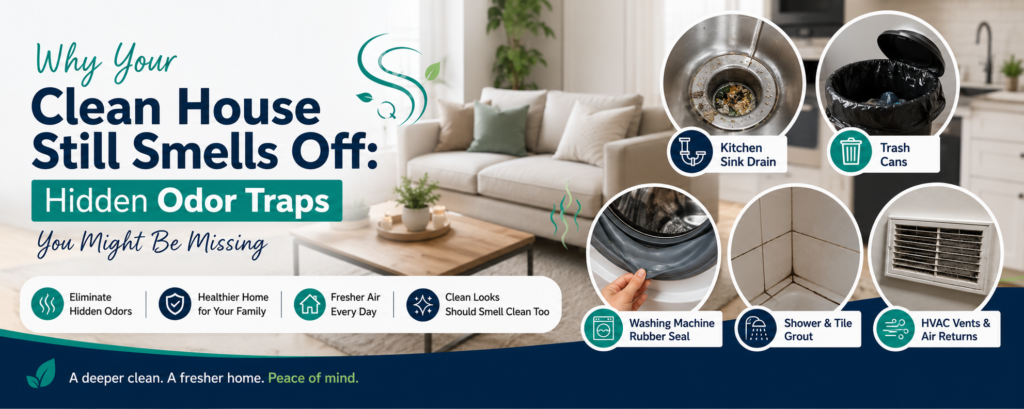
Why Does a Clean House Still Smell Bad?
A home can be visibly clean while still developing unpleasant odors.
That is because cleaning and deodorizing are not always the same thing.
Wiping the outside of an appliance removes surface dirt, but it does not necessarily clean the filter or gasket inside. Mopping the kitchen floor does not remove buildup inside the garbage disposal. Cleaning the bathroom sink does not always address residue hiding inside the overflow opening.
Odors can develop when moisture and organic material remain trapped in enclosed or poorly ventilated spaces.
Common hidden odor sources include:
- Dishwasher filters
- Washing machine rubber gaskets
- Garbage disposals
- Sink drains and overflows
- Refrigerator drip pans
- Trash cans
- Shower drains
- Wet mop heads
- Sponges and cleaning cloths
- Pet bedding
- Carpet fibers
- HVAC filters
- Laundry hampers
This is why even the best cleaners in Dallas TX may recommend looking beyond the visible surfaces when a home has a persistent odor.
Hidden Odor Trap #1: Your Dishwasher Filter
The dishwasher is designed to clean dirty dishes, but that does not mean the appliance cleans itself.
Food particles, grease, and residue can collect in the dishwasher filter. Over time, this buildup can create a sour, musty, or unpleasant smell.
If your dishwasher smells worse when you open the door, the filter is one of the first places to inspect.
How to Reset Your Dishwasher
Before cleaning, check the manufacturer’s instructions for your specific model.
Then:
- Remove the bottom dish rack.
- Locate the dishwasher filter.
- Remove it according to the manufacturer’s directions.
- Rinse the filter under warm water.
- Use a soft brush to remove stubborn residue.
- Wipe around the filter housing.
- Check the bottom of the dishwasher for food particles.
- Reinstall the filter securely.
- Run an appropriate cleaning cycle according to the appliance manufacturer’s recommendations.
Do not use harsh chemicals or abrasive tools unless the manufacturer specifically recommends them.
How Often Should You Clean the Filter?
If you run your dishwasher frequently, inspect the filter at least monthly.
Homes with large families or heavy cooking may need more frequent cleaning.
A clean filter can help prevent food residue from becoming a recurring odor source.
Hidden Odor Trap #2: Washing Machine Rubber Gaskets
Front-loading washing machines are convenient and efficient, but their rubber door gaskets can collect moisture, detergent residue, hair, lint, and other debris.
If you notice a musty smell in your laundry room, inspect the gasket.
Pull the rubber seal back gently and look inside the folds.
You may find water sitting in the bottom portion of the gasket or residue that has accumulated over time.
How to Clean the Washing Machine Gasket
Start by checking your washer’s care instructions.
Then:
- Open the washing machine door.
- Pull the gasket back gently.
- Remove visible hair, lint, and debris.
- Wipe the inside folds with a clean microfiber cloth.
- Use an appropriate appliance-safe cleaner if needed.
- Wipe away all remaining residue.
- Dry the gasket thoroughly.
- Leave the washing machine door open after use when appropriate.
Do not mix cleaning chemicals.
Prevention Is Easier Than Deodorizing
After washing a load, allow the inside of the machine and gasket to dry.
Avoid using more detergent than recommended. Excess detergent can leave residue behind and contribute to buildup.
Running the washer’s manufacturer-recommended cleaning cycle regularly can also help.
For households that rely on recurring cleaning Dallas, adding laundry-area maintenance to the overall cleaning routine can help prevent odors from returning.
Hidden Odor Trap #3: Garbage Disposal
A garbage disposal can look spotless while still producing an unpleasant smell.
Food particles can become trapped around the disposal chamber, splash guard, and surrounding drain area.
The splash guard is particularly easy to overlook because it sits directly above the disposal and may hide residue underneath.
How to Reset Your Garbage Disposal
Always follow the disposal manufacturer’s safety instructions.
Before reaching into or cleaning around the disposal, make sure the appliance cannot accidentally turn on.
Then:
- Remove visible debris only when it is safe to do so.
- Clean the accessible splash guard according to the manufacturer’s instructions.
- Scrub the surrounding sink drain area.
- Rinse thoroughly.
- Run cold water as recommended by the disposal manufacturer.
- Operate the disposal according to its normal instructions.
Never put your hand into an active garbage disposal.
What About Ice or Citrus?
You may see household cleaning tips recommending ice cubes, citrus peels, or other materials.
Be cautious.
Different disposal manufacturers have different recommendations, and some materials may damage components or create problems.
Your owner’s manual is the best source for what can safely go into your particular disposal.
Hidden Odor Trap #4: Sink Overflow Openings
This is one of the most overlooked odor sources in a home.
Many bathroom sinks have a small overflow opening near the top of the basin.
Its purpose is to help prevent the sink from overflowing, but moisture and residue can collect inside the passage.
Because you cannot easily see inside it, you may clean the sink repeatedly without addressing the actual source of the odor.
How to Clean the Sink Overflow
First, determine whether your sink design allows the overflow passage to be safely cleaned.
Then:
- Remove visible debris around the opening.
- Use a suitable small cleaning brush if appropriate.
- Apply an appropriate bathroom-safe cleaner.
- Rinse according to the product instructions.
- Wipe the surrounding sink surface.
- Dry the area.
Avoid forcing tools deep into plumbing passages where they could become stuck or damage components.
If an odor persists after cleaning, the problem may be deeper in the plumbing and may require a plumber.
Hidden Odor Trap #5: Bathroom and Shower Drains
Drains are designed to carry water away, but they can also collect hair, soap residue, body oils, and other organic material.
That combination can produce a musty or sour smell.
A Simple Drain Maintenance Routine
Regularly remove visible hair and debris from drain covers.
Keep the area clean and dry when possible.
For persistent odors, use only products that are appropriate for your plumbing system and follow their directions carefully.
Never mix drain cleaners or combine chemical products.
If a drain smells bad even after cleaning, drains slowly, backs up, or repeatedly develops odors, contact a qualified plumbing professional.
A cleaning service can clean accessible surfaces, but plumbing problems require plumbing solutions.
Hidden Odor Trap #6: Trash Cans
Taking out the trash does not necessarily mean the trash can is clean.
Small leaks from food packaging, beverage containers, meat packaging, or other waste can remain inside the bin.
The result can be a lingering smell that seems to come from the entire kitchen.
Resetting Your Trash Can
Every few weeks — or more often when necessary:
- Empty the can completely.
- Remove any loose debris.
- Wash the inside with an appropriate cleaner.
- Rinse thoroughly if the material allows it.
- Dry completely.
- Clean the lid and handles.
- Replace the liner.
Allowing the bin to dry completely is important because trapped moisture can contribute to odors.
Do not forget the floor and wall around the trash can.
Hidden Odor Trap #7: Refrigerator Drip Areas
Your refrigerator may have hidden areas where moisture collects.
Depending on the model, condensation may drain toward a drip pan or similar component.
If food particles, dust, or moisture accumulate in an accessible area, an unpleasant odor may develop.
Check the manufacturer’s maintenance instructions before attempting to remove or clean any refrigerator components.
Do not force parts out.
If you cannot safely access an odor source, appliance service may be more appropriate than attempting a DIY repair.
Hidden Odor Trap #8: Wet Cleaning Tools
Sometimes the cleaning supplies themselves are responsible for the smell.
A damp mop head, sponge, microfiber cloth, or cleaning brush can develop a musty odor if it is stored wet.
If your house smells strange shortly after cleaning, inspect your cleaning equipment.
Keep Cleaning Tools Fresh
After use:
- Rinse mop heads thoroughly.
- Wash reusable microfiber cloths appropriately.
- Allow cleaning tools to dry completely.
- Replace old sponges.
- Clean mop buckets.
- Avoid storing damp items in closed containers.
- Keep cleaning supplies in a dry, ventilated area.
This is especially important in warm, humid conditions.
Hidden Odor Trap #9: Carpets and Upholstery
Carpets can hold onto odors longer than hard flooring.
Food spills, pet accidents, moisture, and everyday household debris can become trapped within carpet fibers.
Even when the surface looks clean, an odor can remain below the surface.
Regular vacuuming is essential, but occasional professional cleaning may also be necessary.
Professional carpet cleaning Dallas TX services can help address deeper soil and odor sources that regular vacuuming cannot remove.
Upholstered furniture should also be inspected.
Check:
- Couch cushions
- Cushion seams
- Under removable cushions
- Pet beds
- Fabric chairs
- Ottomans
- Upholstered headboards
Always follow the manufacturer’s care instructions before using cleaning products on upholstery.
Hidden Odor Trap #10: Pet Areas
Pet owners already know that accidents can happen.
However, even when there are no obvious accidents, pet bedding, toys, blankets, carpets, and upholstery can collect odors.
Wash pet bedding according to the manufacturer’s instructions and clean floors around feeding and sleeping areas.
If a pet odor continues despite cleaning, there may be an old accident that has penetrated carpet padding or flooring.
In those situations, professional odor treatment may be necessary.
The 30-Minute Odor Reset
If your house suddenly smells “off,” do not start by cleaning everything.
Instead, spend 30 minutes checking the most common odor traps.
First 5 Minutes: Kitchen
Inspect:
- Garbage disposal
- Sink drain
- Trash can
- Dishwasher
- Refrigerator area
Remove obvious food debris and identify anything that smells stronger than expected.
Next 5 Minutes: Laundry Room
Check:
- Washing machine gasket
- Detergent drawer
- Washer drum
- Damp towels
- Laundry hamper
Remove wet laundry and allow the washing machine to dry according to its care instructions.
Next 5 Minutes: Bathroom
Inspect:
- Sink overflow
- Sink drain
- Shower drain
- Trash can
- Damp towels
- Bath mats
Next 5 Minutes: Living Areas
Check:
- Upholstered furniture
- Pet bedding
- Rugs
- Trash containers
- Damp cleaning tools
Final 10 Minutes: Ventilation
Open windows when weather and outdoor conditions allow.
Run appropriate exhaust fans.
Check HVAC filters and vents according to the manufacturer’s recommendations.
The objective is not to cover up an odor with air freshener. It is to locate the source.
Why Air Fresheners Do Not Solve the Problem
Air fresheners can make a room smell different, but they generally do not remove the source of a persistent odor.
If the smell comes from food residue inside a dishwasher filter, adding fragrance to the room does not clean the filter.
If a washing machine gasket has developed buildup, spraying the room with fragrance does not solve the problem.
The best approach is:
Find the source → clean the source → dry the area → prevent future buildup.
This simple approach can make a much bigger difference than continuously adding fragrances.
How Often Should You Perform an Odor Audit?
You do not need to perform a complete odor audit every week.
Instead, create a rotating schedule.
Weekly
Check:
- Kitchen sink
- Garbage disposal
- Trash can
- Bathroom drains
- Damp towels
- Cleaning tools
- Pet areas
Monthly
Inspect:
- Dishwasher filter
- Washing machine gasket
- Detergent drawer
- Sink overflow
- Refrigerator areas
- Upholstered furniture
- Carpet edges
Every Few Months
Consider:
- Professional carpet cleaning
- Deep cleaning
- Detailed appliance cleaning
- Thorough furniture cleaning
- Hard-to-reach areas
- Areas behind and underneath furniture
A deep cleaning Dallas TX service can be a good option when odors are accompanied by significant buildup throughout the home.
When Regular Cleaning Is Not Enough
Sometimes a persistent odor has nothing to do with ordinary household dirt.
If you repeatedly clean the same area and the smell returns, consider whether there could be:
- Plumbing problems
- Water leaks
- Mold or moisture problems
- HVAC issues
- Appliance problems
- Hidden pet accidents
- Spoiled food
- Pest activity
A professional cleaning company can help identify visible cleaning-related sources, but certain issues require specialized professionals.
For example, persistent sewage odors may require a plumber. A recurring musty smell associated with visible water damage may require a qualified moisture or remediation professional.
Do not simply mask an unexplained odor.
When to Schedule a Professional Cleaning
If your home has accumulated months of dust, grime, and buildup, it can be difficult to get everything under control during a normal cleaning session.
Professional house cleaning Dallas Texas services can help restore the home’s overall cleanliness while homeowners focus on maintenance between visits.
Professional cleaning can be especially helpful for:
- Busy households
- Large homes
- Move-in preparation
- Move-out preparation
- Apartment turnovers
- Homes after renovations
- Seasonal deep cleaning
- Recurring maintenance
Depending on your needs, you may be looking for maid service Dallas TX, residential cleaning Dallas, professional cleaners Dallas, or affordable maid service Dallas.
The best service is the one that matches the actual condition and needs of your home.
Cleaning After Moving
Moving is one of the easiest times for hidden odors to become noticeable.
A vacant property can reveal smells that were previously covered by furniture, rugs, air fresheners, or everyday activity.
Before moving into a new home, consider move in cleaning Dallas TX.
A detailed move-in cleaning can address accessible surfaces throughout the property before boxes and furniture make those areas harder to reach.
Likewise, move out cleaning Dallas can help prepare a home or apartment for its next occupants.
For renters and property managers, removing lingering odors can also make a property feel significantly more welcoming.
Cleaning After Construction or Remodeling
Construction dust can settle into surprisingly small spaces.
After remodeling, dust may accumulate around:
- Cabinets
- Vents
- Trim
- Floors
- Window frames
- Appliances
- Shelving
- Baseboards
A post construction cleaning Dallas service can help remove accessible construction-related dust and debris after renovation work is complete.
Keep in mind that some construction materials or hazardous substances require specialized handling rather than ordinary residential cleaning.
Choosing a Cleaning Company in Dallas
If you want help maintaining your home, look for a cleaning company Dallas TX that clearly explains what its services include.
Ask about:
- Standard cleaning
- Deep cleaning
- Recurring services
- Move-in cleaning
- Move-out cleaning
- Apartment cleaning
- Carpet cleaning
- Post-construction cleaning
- Commercial cleaning
- Same-day availability
- Cleaning products
- Additional service fees
For businesses, office cleaning Dallas TX and commercial cleaning Dallas require a different approach than residential cleaning.
For homeowners, the focus may be bedrooms, kitchens, bathrooms, floors, and recurring maintenance.
For property managers, turnover speed and consistency may be more important.
Finding a top cleaning company Dallas Texas means finding a service that understands your particular cleaning needs.
Eco-Friendly Odor Control
If you prefer fewer harsh chemicals in your home, ask about eco friendly cleaning Dallas options.
Many routine cleaning tasks can be handled with microfiber cloths, appropriate vacuuming, ventilation, and surface-safe cleaning products.
However, “natural” does not automatically mean safe.
Never mix household chemicals, especially products containing bleach, ammonia, acids, or other reactive ingredients.
Always follow product labels and manufacturer instructions.
Building a Recurring Cleaning Routine
One of the easiest ways to prevent odors from returning is to stop treating cleaning as a one-time event.
A recurring cleaning Dallas schedule can keep the home’s main surfaces under control while allowing hidden-area tasks to be rotated throughout the year.
For many households, weekly cleaning Dallas TX can provide a manageable maintenance routine.
Others may need biweekly or monthly visits.
A recurring schedule can include different priorities over time:
Week 1: General cleaning and kitchen focus
Week 2: Bathrooms, floors, and dusting
Week 3: Upholstery, vents, and hidden dust areas
Week 4: Appliance exteriors and overlooked areas
The exact schedule can be adjusted to the home’s needs.
Final Thoughts: Find the Smell Instead of Covering It
A clean home should not have to smell heavily of air freshener to feel fresh.
If your house looks clean but still smells “off,” start investigating the places you rarely think about.
Check the dishwasher filter. Inspect the washing machine gasket. Clean the garbage disposal and sink overflow. Look at drains, trash cans, carpets, upholstery, pet bedding, and damp cleaning tools.
These small areas can make a surprisingly big difference.
When you need help getting your home back to a clean baseline, house cleaning Dallas TX services can provide the detailed cleaning needed to tackle accumulated dirt and overlooked areas. From same day cleaning Dallas TX to affordable deep cleaning services in Dallas, professional help can make maintaining your home easier.
For homeowners looking for reliable house cleaning services in Dallas TX, the goal should not simply be a home that looks clean. It should be a home that feels clean, smells fresh, and stays that way.
And when a strange odor returns, remember: do not cover it up first.
Find the trap. Clean the source. Dry the area. Then build it into your regular routine.
Frequently Asked Questions
Why does my house smell bad even though it is clean?
Hidden moisture, food residue, appliance buildup, drains, garbage disposals, washing machine gaskets, carpets, and upholstery can all produce odors even when visible surfaces are clean.
What is the first place I should check when my kitchen smells bad?
Start with the garbage disposal, sink drain, dishwasher filter, trash can, and refrigerator area. These are common locations for food particles and moisture to accumulate.
How often should I clean my dishwasher filter?
Inspect it at least monthly if you use the dishwasher regularly. Homes with heavy dishwasher use may need more frequent maintenance. Always follow the appliance manufacturer’s instructions.
Why does my washing machine smell musty?
Moisture, detergent residue, and debris can collect inside the rubber gasket, detergent drawer, and drum. Cleaning these areas and allowing the machine to dry according to the manufacturer’s recommendations can help.
Can professional cleaning remove persistent odors?
Professional cleaning can address many household odor sources, including accumulated dirt, carpet soil, upholstery buildup, and accessible appliance-area residue. However, persistent odors caused by plumbing, moisture damage, pests, or appliance problems may require specialized services.
Is deep cleaning better for odor problems?
A deep cleaning Dallas TX service can be useful when odor is accompanied by significant buildup or when a home has not been thoroughly cleaned for an extended period. It provides a stronger reset before beginning regular maintenance.
How can I keep my home smelling fresh between cleanings?
Clean drains and appliance filters regularly, dry damp items quickly, wash bedding and pet areas, empty trash frequently, ventilate when appropriate, and keep recurring cleaning tasks on a schedule.
Should I use air fresheners to eliminate odors?
Air fresheners can change how a room smells, but they do not address the source of persistent odors. Finding and cleaning the odor source is the better long-term approach.
Can carpet cause a house to smell?
Yes. Carpet can absorb and retain odors from spills, pets, moisture, food, and everyday household activity. Regular vacuuming and periodic professional carpet cleaning Dallas TX can help maintain fresher flooring.
When should I call a professional?
If an odor continues after reasonable cleaning, becomes stronger, smells like sewage or chemicals, or is associated with water damage, leaks, or other unusual conditions, consider contacting the appropriate qualified professional rather than continuing to mask the smell.
Contact us at 214–597–6654 or visit https://cowboyscleaning.com/home-cleaning-dallas-tx/ to book your service.